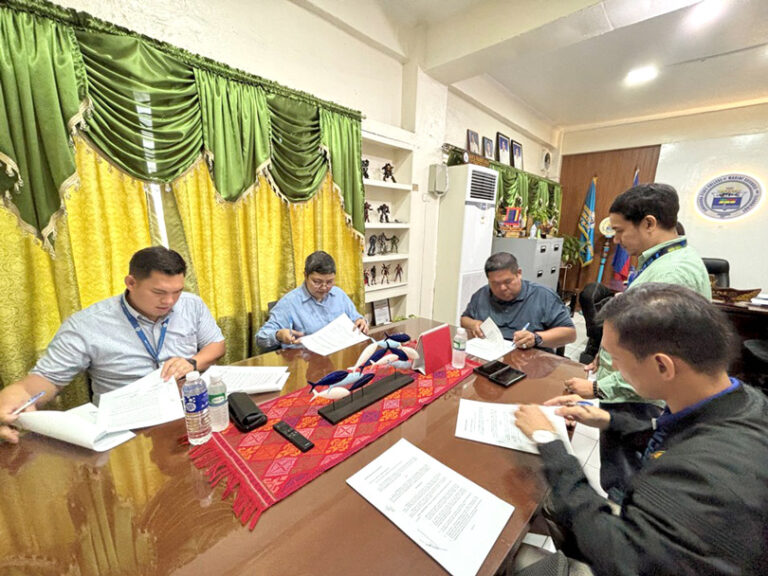

COTABATO CITY – The Bangsamoro Parliament, in a special session on January 12 that extended past midnight, approved on third and final reading Parliament Bill No. 415, the districting law that formally defines the 32 parliamentary districts of the BARMM, a key requirement for the conduct of the region’s first parliamentary elections, with the approval recorded at 12:33 a.m. on January 13.

PB No. 415 was approved with 48 members voting in favor, 19 against, and four abstentions.
Lawmakers said PB No. 415 is the closest measure to addressing the legal concerns raised by the Supreme Court, while ensuring elections can proceed in a credible and orderly manner.
BARMM is the only region in the country operating under a parliamentary form of government. Its first regular Parliament will be composed of 80 members, 40 political party representatives, 32 district representatives, and eight sectoral representatives, a composition that cannot be completed without a valid districting framework.
Floor Leader and Parliament Spokesperson John Anthony “Jet” Lim said lawmakers ensured the bill was legally sound, incorporating the Supreme Court’s guidance while safeguarding the region’s election timetable.
Lawmakers emphasized the importance of holding elections to give voice to over 4.5 million residents of BARMM, advancing democratic participation and the transition to parliamentary governance in the region.
Deputy Speaker Nabil Tan explained that without the passage of a districting bill, parliamentary elections could not proceed. He said the measure enables the Bangsamoro to exercise its autonomy, uphold the peace process, and move forward in a democratic and orderly manner.
He also clarified that the Bangsamoro Parliament is not abandoning Sulu, noting that issues such as the province’s potential return will be addressed at another time and in the appropriate venues, including Congress and the courts.
Supreme Court guidance prompted the law
The Supreme Court earlier declared Bangsamoro Autonomy Act Nos. 77 and 58 unconstitutional, citing legal and procedural requirements that needed to be addressed before elections could proceed.
The Court ruled that BAA No. 77, enacted in August 2025, was passed after the election period had already begun, and that some of its district configurations did not fully comply with the Bangsamoro Organic Law’s requirement that districts be contiguous and adjoining, particularly in Lanao del Sur, Maguindanao del Norte, and Cotabato City.
The Court clarified that nullifying BAA No. 77 did not revive BAA No. 58, which was based on an earlier regional setup that still included Sulu.
Without a valid districting law, Comelec could not reasonably prepare for elections involving more than 2.25 million voters across 105 municipalities and three cities.
The Court directed the Parliament to enact a new and valid districting law, and instructed the Commission on Elections to proceed with preparations for elections not later than March 31, 2026.
PB 415 addresses Supreme Court concerns
Following the ruling, six districting bills, Parliament Bill Nos. 403, 407, 408, 411, 415, and 416, were filed and jointly reviewed by the Committees on Local Government and Rules.
The committees resolved to archive the other five bills, citing PB 415 as the measure closest to legal and constitutional compliance.
Committee on Local Government Chair Naguib Sinarimbo said PB No. 415 was approved because it directly addresses three key areas highlighted by the Supreme Court as unconstitutional: the district configuration in Lanao del Sur, Maguindanao del Norte, and Cotabato City.
“The committee carefully adjusted these districts to ensure they are contiguous, compact, and adjacent, fully complying with the Court’s guidance,” Sinarimbo said.
Sinarimbo also urged political parties and sectoral groups to ensure stronger representation from the island provinces, particularly in the selection of party-list and sectoral nominees.
He said that while districting determines only 32 seats, the composition of the full Parliament also depends on how political parties and sectoral assemblies choose their representatives.
PB 415 was first approved by the committee on December 17, following extensive deliberations and public consultations across all BARMM provinces, allowing lawmakers to gather local input and ensure inclusive, community-based representation.
District allocation
Under the approved law, parliamentary seats are allocated as follows: nine for Lanao del Sur; five each for Maguindanao del Norte and Maguindanao del Sur; four each for Basilan and Tawi-Tawi; three for Cotabato City; and two for the Special Geographic Area.
Districts are apportioned based on BARMM’s 4,545,486 population, with each district comprising at least 100,000 residents within contiguous, compact, and adjacent territory.
Comelec: elections remain on track
The Commission on Elections earlier suspended the filing of certificates of candidacy (COC) for the March 2026 BARMM parliamentary elections.
In Resolution No. 11183, the Comelec En Banc decided not to proceed with the scheduled Jan. 5–9 filing period, stating that a new schedule would be set “after the enactment of the parliamentary districting by the BTA.”
Comelec Spokesperson John Rex Laudiangco clarified that only the filing of COCs was suspended, not the entire election calendar.
He said the Comelec remain fully committed to holding the Bangsamoro Parliamentary Elections once the new law takes effect.
Urgent action ensures timely elections
Chief Minister Abdulraof Macacua certified PB 415 as urgent, highlighting the high stakes as the election timeline tightens.
Although the Parliament’s regular session was scheduled for January 19, lawmakers convened a special session on January 12 to act on the measure, citing the urgency of completing the legal requirements for the election process. Lawmakers said that with PB 415 now in place, the Bangsamoro Parliament has completed the district framework needed for the first regular elections. (LTAIS-Public Information, Publication, and Media Relations Division)

 20
20